How to Unclog a Bosch Dishwasher Drain
To unclog a Bosch dishwasher drain, turn off the power, remove standing water, take out and clean the drain filter, check the drain hose and air gap for blockages, then run a rinse cycle to test. Most clogs are caused by a dirty filter or food debris trapped in the drain hose — not a mechanical failure.
If your Bosch dishwasher is leaving standing water, draining slowly, or making a gurgling noise, a clog is almost always the culprit. This guide walks through every step in the order a Bosch technician would actually check them.
Read More: Bosch Dishwasher Reset Button Guide (2026)
Why Is My Bosch Dishwasher Not Draining?
The most common causes, in order of likelihood:
- Clogged filter assembly — food particles and grease build up over time
- Blocked drain hose — debris or a kink stops water from reaching the disposal
- Clogged air gap or garbage disposal knockout plug — common after a new disposal install
- Faulty drain pump or check valve — less common, usually needs a technician
Start with the filter and hose before assuming it’s a mechanical issue — that resolves the clog in most cases.
How to Unclog a Bosch Dishwasher Drain: Step-by-Step
Step 1: Turn Off Power and Remove Standing Water
Switch off the dishwasher at the breaker or unplug it. Use a cup or a wet/dry vacuum to remove any standing water from the tub floor so you can work without spilling.
Step 2: Remove and Clean the Filter Assembly
Bosch dishwashers use a removable filter at the bottom of the tub, usually near the spray arm.
- Twist the filter counterclockwise (about a quarter turn) and lift it out
- Rinse it under hot water
- Use an old toothbrush to scrub off trapped food, grease, or glass shards
- Check the mesh screen underneath for a second layer of buildup
This step alone fixes the majority of Bosch drainage clogs.
Step 3: Inspect the Drain Hose
The drain hose connects the dishwasher to your sink drain or garbage disposal.
- Unplug the dishwasher and pull it away from the cabinet
- Disconnect the hose at the sink or disposal end
- Run water through it — if the flow is slow, feed a plumber’s snake through to clear debris
- Check for kinks or a low loop, since a bent hose blocks drainage even when it’s clean
Step 4: Check the Air Gap and Disposal Knockout Plug
If your dishwasher connects to a garbage disposal:
- Remove the air gap cover (if present) on the sink and clear any debris
- If you recently installed a new disposal, confirm the knockout plug inside the disposal inlet was removed — this is a very common overlooked clog point.
Step 5: Clean the Drain Pump Area
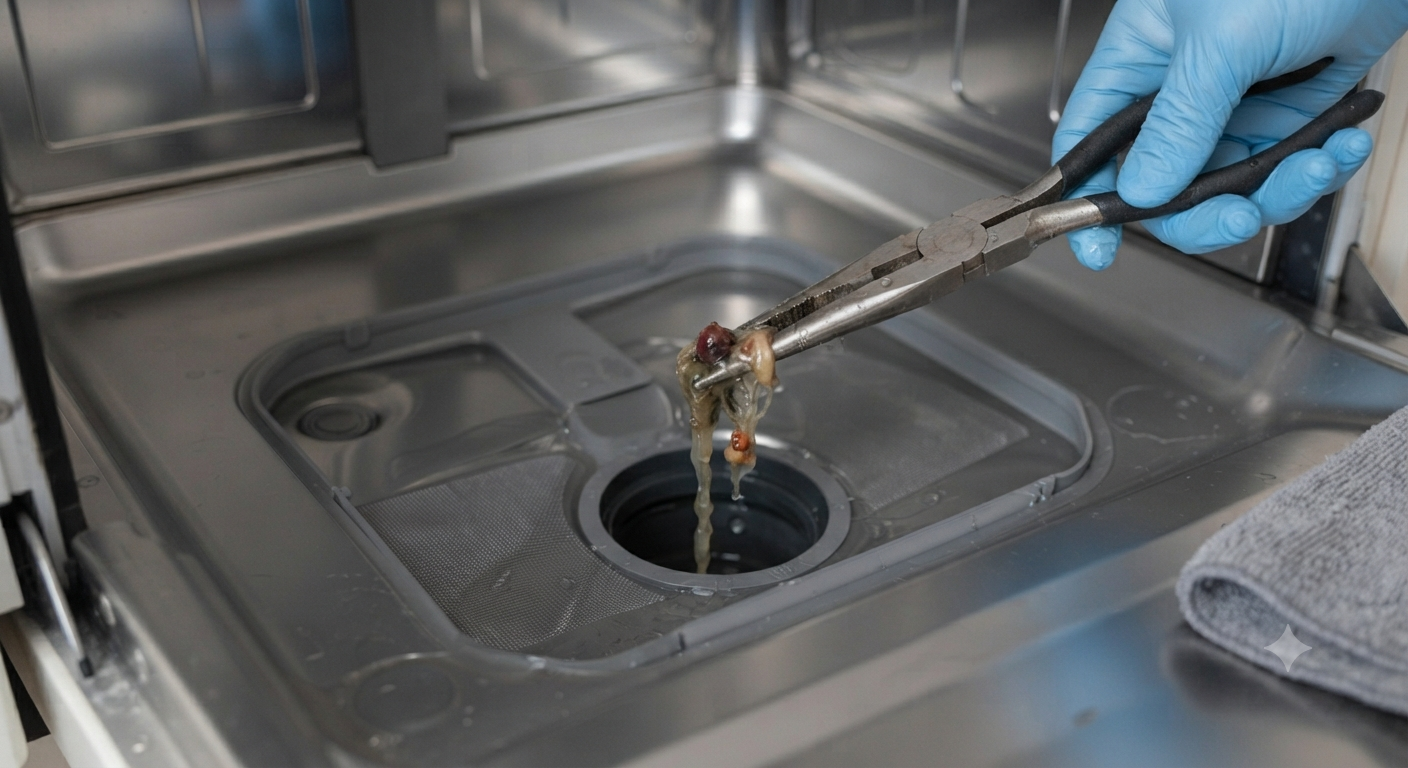
With the filter removed, look into the sump area for stuck items like glass fragments, bottle caps, or produce stickers. Remove anything visible by hand — do not run the dishwasher with foreign objects still inside.
Step 6: Run a Test Cycle
Reassemble the filter, reconnect the hose, and run a short rinse cycle. Watch the drain phase specifically to confirm water is leaving the tub completely.
People Also Ask
How do I know if my Bosch dishwasher drain is clogged?
Standing water at the bottom of the tub after a cycle, gurgling sounds during draining, or a foul odor are the clearest signs of a clogged drain.
Can I use vinegar to unclog a Bosch dishwasher?
Yes — running a cycle with a cup of white vinegar in the bottom of the tub can help dissolve grease and light buildup, but it won’t remove solid debris like glass or food chunks. Use it as a maintenance step, not a fix for a hard clog.
Where is the drain filter on a Bosch dishwasher?
It’s located at the bottom of the tub, typically under or near the lower spray arm. Twist it counterclockwise to remove it.
Why does my Bosch dishwasher smell bad even after cleaning?
A smell that persists after cleaning the filter usually means debris is still trapped in the drain hose or air gap, or the check valve near the pump is stuck open, allowing dirty water to sit.
How often should I clean my Bosch dishwasher filter?
Once a month for typical use, or every two weeks if you run the dishwasher daily or often skip pre-rinsing dishes.
Do I need a plumber to unclog a Bosch dishwasher?
Not usually. Filter and hose clogs are a DIY fix. Call a technician if you’ve cleared the filter and hose and water still won’t drain — that points to a pump or check valve issue.
When to Call a Professional
Call a Bosch-authorized technician if:
- You’ve cleaned the filter and hose, and the dishwasher still won’t drain
- You hear the drain pump humming, but no water moves (possible pump failure)
- Error codes related to drainage appear on the display
- The clog keeps returning within days of clearing it (may indicate a failing check valve)
Conclusion
A clogged Bosch dishwasher drain is almost always a filter or hose problem, not a broken machine. Work through the steps in order — power off, clean the filter, check the hose, check the air gap — and most units drain normally again within 15 minutes. If water is still pooling after all six steps, that’s your signal that the pump or check valve needs a professional look rather than another round of DIY troubleshooting. A quick monthly filter check going forward is the easiest way to keep the clog from coming back.