
A clean dishwasher does more than keep your dishes spotless—it can also help reduce odors, mineral buildup, and residue inside the appliance. For Bosch dishwasher owners, using a suitable dishwasher cleaner and descaler can be an important part of routine maintenance.
Whether you are noticing a musty smell, cloudy deposits, grease buildup, or reduced cleaning performance, regular dishwasher care can help keep the machine running efficiently.
Read More: 7 Best Dishwashers of 2026: Top Picks for Cleaning, Drying, Quietness & Value
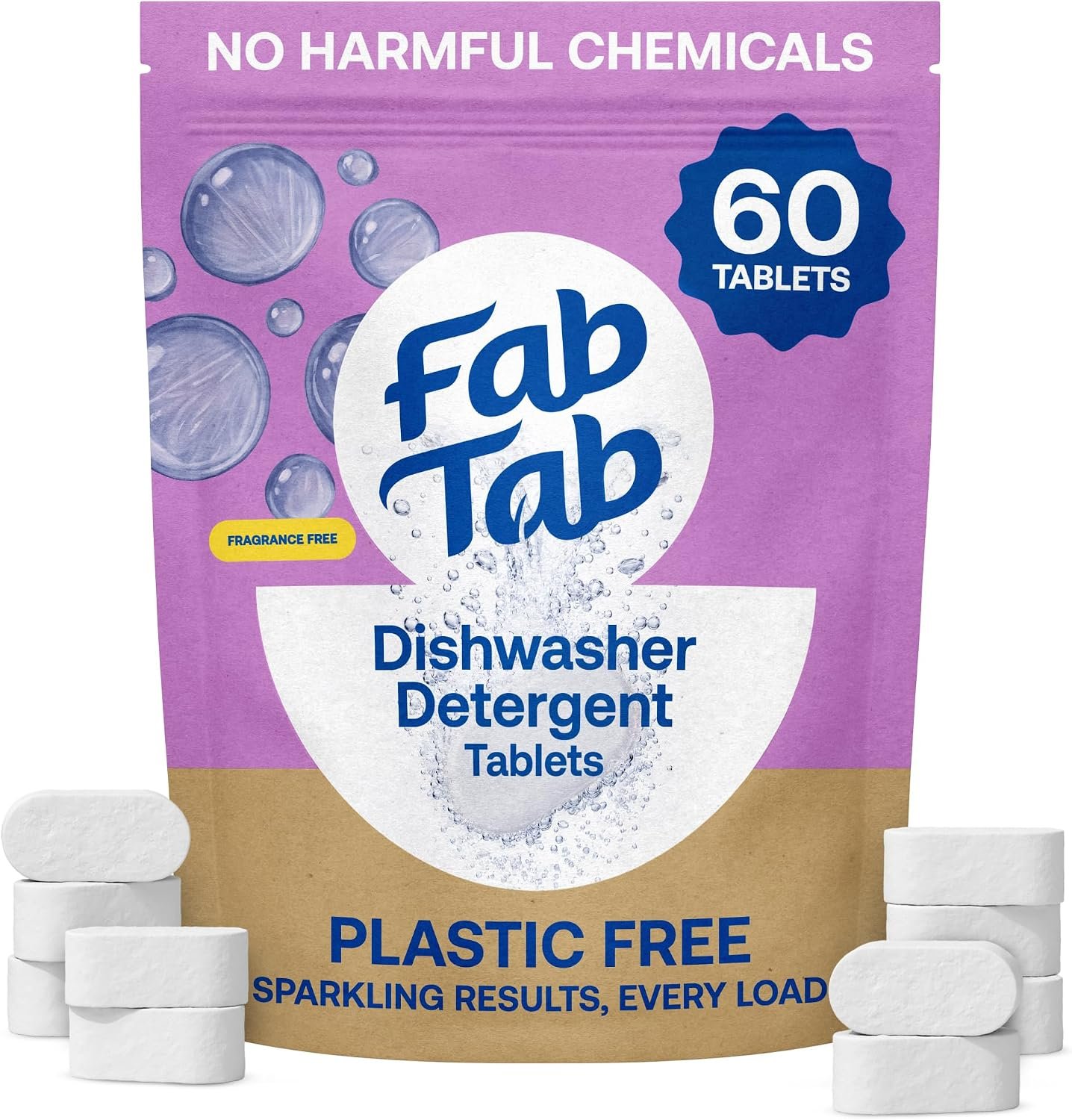
What Is a Bosch Dishwasher Cleaner and Descaler?
A dishwasher cleaner and descaler is a maintenance product designed to remove different types of buildup from the dishwasher interior.
A dishwasher cleaner generally targets:
- Grease and food residue
- Soap and detergent buildup
- Unpleasant odors
- General grime inside the appliance
A descaler is formulated to tackle mineral deposits caused by hard water, particularly calcium and limescale.
Some maintenance products combine cleaning and descaling functions, while others are designed specifically for one purpose. Always check the product label and your dishwasher’s care instructions before use.
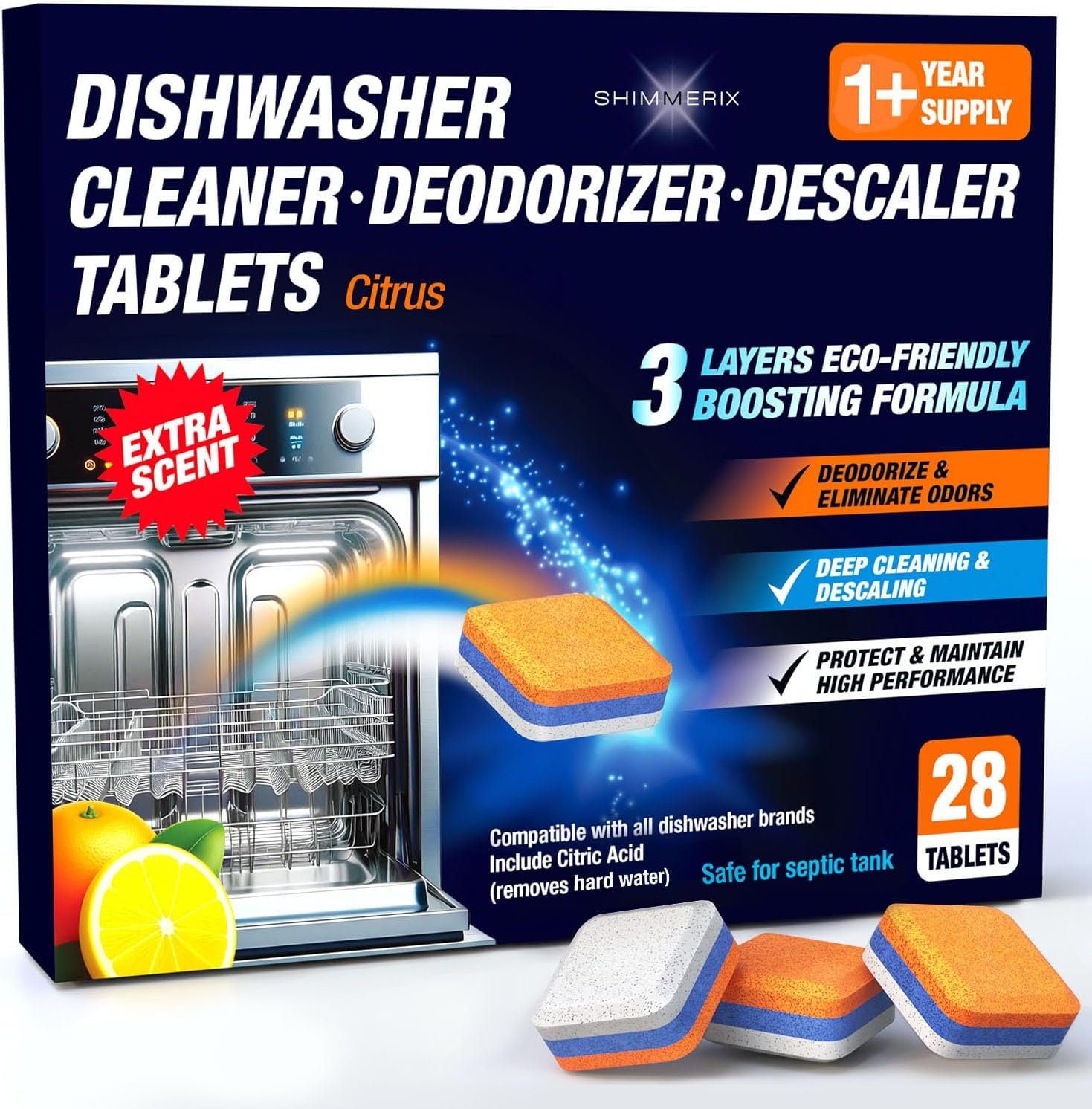
Why Should You Clean and Descale a Bosch Dishwasher?
Dishwashers are regularly exposed to food particles, grease, detergent residue, and water minerals. Over time, these substances can accumulate in areas that are difficult to reach during normal washing cycles.
Regular maintenance may help:
- Reduce unpleasant dishwasher odors
- Remove grease and residue
- Minimize visible limescale
- Keep internal components cleaner
- Maintain good washing performance
- Support routine appliance maintenance
If your home has hard water, descaling can be particularly relevant because mineral deposits can accumulate more quickly.
Bosch Dishwasher Cleaner vs. Descaler
Although the terms are sometimes used together, cleaning and descaling address different problems.
| Product type | Main purpose | Useful when |
| Dishwasher cleaner | Removes grease, residue, and grime | The dishwasher smells or looks dirty |
| Dishwasher descaler | Removes mineral and limescale deposits | You have hard water or visible scale |
| Cleaner + descaler | Addresses both types of buildup | You want convenient routine maintenance |
For the right maintenance routine, consider what is actually building up inside your dishwasher rather than assuming that every problem requires the same product.
How to Use Dishwasher Cleaner and Descaler
Before using any dishwasher maintenance product, check the instructions supplied with your specific Bosch model and follow the product manufacturer’s directions.
A typical maintenance process may involve:
- Empty the dishwasher. Remove dishes, utensils, and other items.
- Check the filter. Remove and clean accumulated food particles according to the dishwasher’s instructions.
- Prepare the cleaning or descaling product. Follow the exact dosage and placement instructions on its packaging.
- Run the recommended cycle. Use the cycle specified by the product and appliance instructions.
- Inspect the interior. Check for remaining residue or mineral deposits.
- Repeat maintenance when appropriate. Frequency depends on water hardness, dishwasher use, and the product instructions.
Do not mix cleaning chemicals unless the manufacturers specifically state that they can be combined.
How Often Should You Descale a Bosch Dishwasher?
There is no single schedule that applies to every household. Descaling frequency depends largely on water hardness and how often the dishwasher is used.
Homes with hard water may require more frequent descaling than homes with softer water. If you frequently notice white mineral deposits around the dishwasher interior, racks, or other surfaces, it may be worth reviewing your maintenance routine and the appliance’s water-hardness settings.
Your Bosch dishwasher’s user manual is the best reference for model-specific maintenance recommendations.
Signs Your Dishwasher May Need Cleaning or Descaling
Watch for common signs such as:
1. Unpleasant odors
Persistent smells after washing can indicate food residue, grease, or buildup inside the appliance.
2. White or chalky deposits
White marks can be associated with mineral deposits, particularly in hard-water areas.
3. Residue on dishes
If dishes come out with spots or deposits, check the dishwasher’s filter, spray arms, detergent use, rinse-aid settings, and water-hardness settings before assuming descaling alone will solve the problem.
4. A visibly dirty interior
Grease and food residue can accumulate over time, especially in heavily used dishwashers.
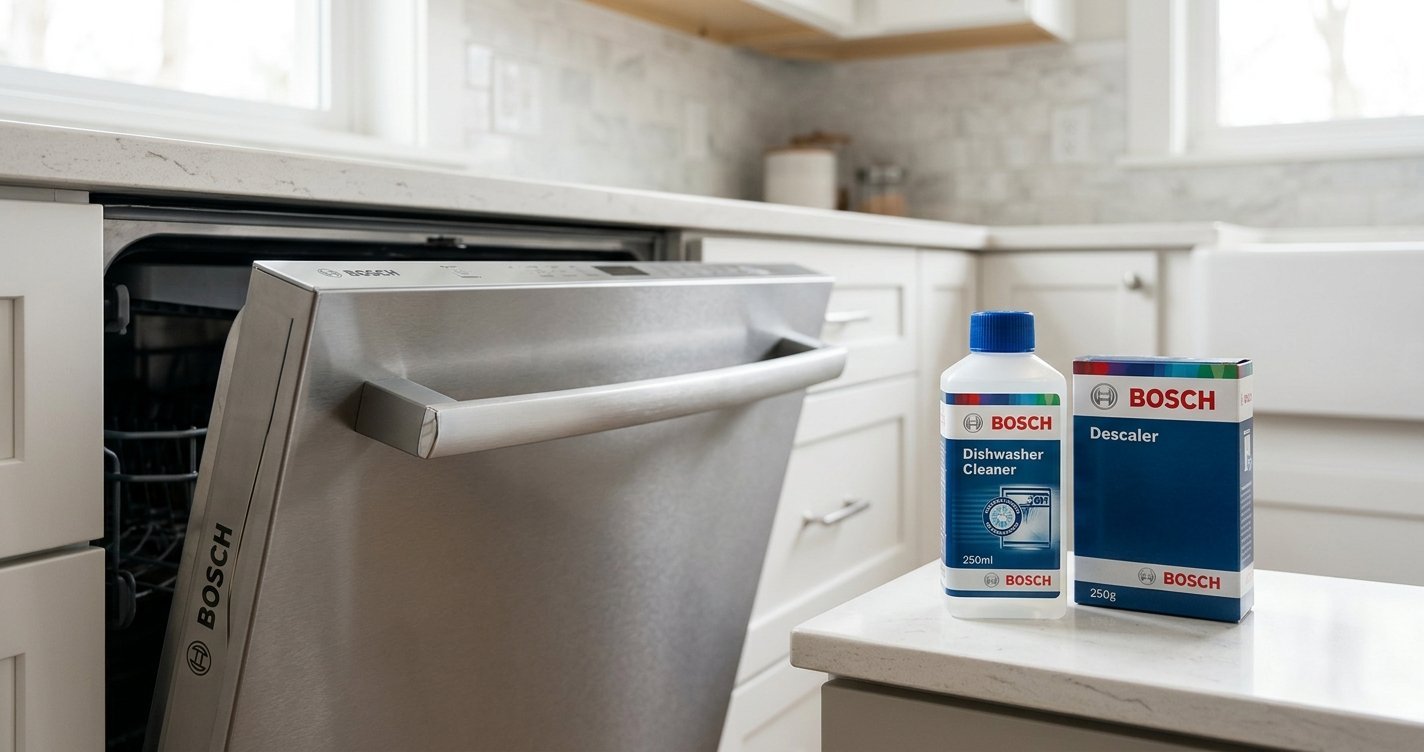
Choosing a Dishwasher Cleaner or Descaler
When shopping for a Bosch dishwasher maintenance product, consider:
- Compatibility: Confirm that the product is suitable for dishwashers and your Bosch model.
- Cleaning purpose: Decide whether you need a cleaner, descaler, or combined product.
- Water hardness: Hard-water households may place greater emphasis on descaling.
- Instructions: Choose products with clear usage and dosage directions.
- Manufacturer guidance: Check Bosch’s recommendations before using third-party products.
- Frequency of use: Look for a maintenance product appropriate for your intended cleaning schedule.
If you specifically want a Bosch-branded maintenance product, check Bosch’s official appliance-care range and verify compatibility with your model before purchasing.
Bosch Dishwasher Maintenance Tips
A cleaner dishwasher starts with regular basic maintenance. Along with periodic cleaning or descaling:
- Clean the filter regularly.
- Remove large food particles before loading dishes.
- Check spray arms for blocked openings.
- Use dishwasher detergent according to its instructions.
- Keep the door seal clean.
- Use rinse aid if recommended for your setup.
- Check and maintain the dishwasher’s water-hardness settings.
- Run maintenance cycles according to the appliance and product instructions.
These simple steps can complement the use of a dishwasher cleaner or descaler.
Is a Bosch Dishwasher Cleaner and Descaler Worth Buying?
For homeowners who want a convenient way to maintain their dishwasher, a dedicated cleaner or descaler can be a practical maintenance purchase. The appropriate product depends on whether the main issue is grease and residue, mineral buildup, or both.
If you’re shopping for one, compare the product’s ingredients, intended use, compatibility, instructions, and cost per treatment rather than choosing based solely on the word “Bosch” on the packaging.
FAQs: Bosch Dishwasher Cleaner and Descaler
1. What does a Bosch dishwasher cleaner and descaler do?
A dishwasher cleaner helps remove grease, food residue, and odors, while a descaler helps tackle mineral and limescale buildup caused by hard water.
2. How often should I use dishwasher cleaner and descaler?
The ideal frequency depends on dishwasher usage, water hardness, and the product instructions. Homes with hard water may need more frequent descaling.
3. Can I use dishwasher cleaner and descaler in any Bosch dishwasher?
Always check the product label and your specific Bosch dishwasher manual to confirm compatibility and follow the recommended instructions.
4. Does dishwasher descaler remove limescale?
Yes. Descaling products are specifically designed to help dissolve and remove mineral deposits such as limescale.
5. Why does my Bosch dishwasher smell bad?
Odors can result from food particles, grease, residue, or buildup in areas such as the filter and interior. Regular cleaning and filter maintenance can help reduce unpleasant smells.
Final Thoughts
Using a suitable Bosch dishwasher cleaner and descaler can be part of a regular appliance-maintenance routine. Cleaner products are generally intended to address grease and residue, while descalers target mineral deposits associated with hard water.
For the best results, combine periodic maintenance with filter cleaning, spray-arm checks, correct detergent use, and the maintenance recommendations for your particular Bosch dishwasher model.