
Most dishwasher cleaners work the same basic way: place the tablet, pod, or liquid at the bottom of the tub (not the detergent dispenser or utensil basket, unless the packaging says otherwise), close the door, and run a normal cycle on the hottest water setting available. You can typically run it empty for a deeper clean, or with dishes if you’re mainly targeting mineral buildup and cloudy glassware. Do this once a month for routine maintenance, and avoid combining it with vinegar, baking soda, or bleach in the same cycle.
Read More: Bosch Dishwasher at Costco: Is It Worth Buying in 2026?
Before You Start: Prep Your Dishwasher
A few quick steps make any dishwasher cleaner noticeably more effective:
- Clear the filter first. Remove and rinse out any large food particles or debris — glass, popcorn kernels, paper — so the cleaner isn’t working against unnecessary obstructions.
- Run the garbage disposal beforehand, if your dishwasher shares a drain with one. Both appliances use the same line, and a clogged disposal can cause water to back up during the dishwasher cycle.
- Run the kitchen faucet until the water is hot before starting the dishwasher. Starting with hot water already in the line helps the cleaner dissolve and work more effectively from the very first minute of the cycle.
- Decide empty or loaded. Both work, but running the dishwasher empty focuses the cleaner entirely on the appliance’s interior surfaces, which is generally the better choice for an initial deep clean or particularly heavy buildup.
How to Use Dishwasher Cleaner: Step by Step
1. Choose Empty vs. Loaded
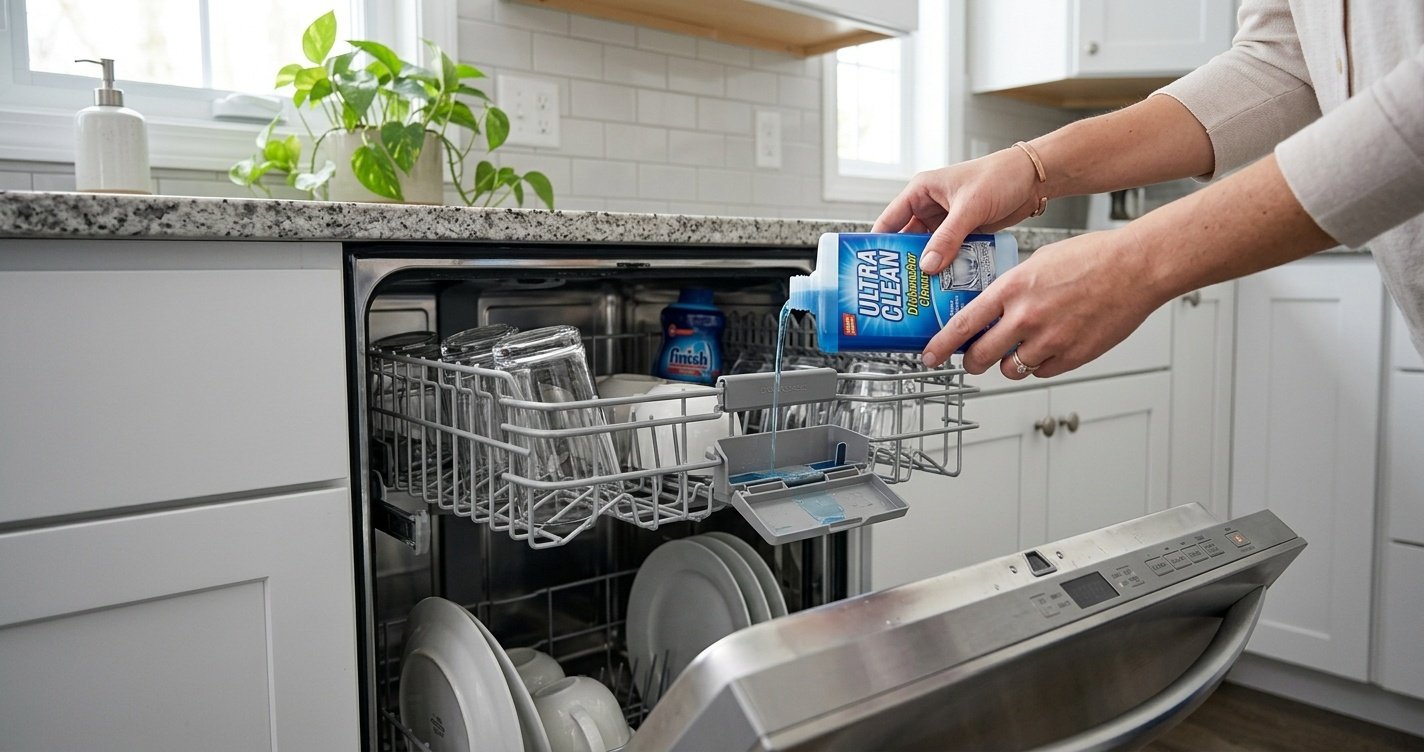
- Empty dishwasher: Best for a genuine deep clean, especially the first time you use a cleaner or when buildup is heavy. Place the cleaner in the detergent dispenser (for a liquid or pod formula) or directly in the bottom of the tub (for tablets like Affresh).
- With dishes: Most dishwasher cleaners are safe to run alongside a normal load, and since several formulas also help descale glassware and dishes, running it loaded can actually improve how your dishes come out — just add your regular detergent as usual and place the cleaner tablet in the bottom of the tub rather than the dispenser.
2. Place the Cleaner Correctly
This is the step people get wrong most often. For tablet cleaners like Affresh, place the tablet directly on the bottom of the dishwasher tub — not in the utensil basket and not in the detergent compartment, unless you’re running the dishwasher empty, in which case the dispenser is fine. For liquid cleaners (like Finish’s dual-action formula), follow the specific placement instructions on the bottle, which is typically upside down in the bottom rack.
3. Select the Hottest Normal Cycle
Choose a standard/normal wash cycle and select the hottest water temperature setting your dishwasher offers. The cleaner needs heat to fully dissolve and break down grease, mineral deposits, and odor-causing residue as it circulates through the spray arms, pump, hoses, filter, and drain.
4. Let the Full Cycle Run Without Interruption
Close the door and let the cycle complete from start to finish. Opening the door partway through interrupts the cleaning process and can leave some areas of the interior untreated.
5. Wipe Down the Door Gasket and Edges
Once the cycle finishes, use a damp cloth to wipe the door gasket, the edges of the door, and the control panel. These areas don’t always get fully reached by the water spray and often hold onto residual grime even after a cleaning cycle.
6. Leave the Door Ajar to Dry
After the cycle, leave the dishwasher door slightly open to let it air out and dry fully. This helps prevent lingering moisture, which is one of the more common causes of musty odors returning shortly after a clean.
What to Avoid When Using Dishwasher Cleaner
- Don’t mix it with other cleaners. Avoid combining a dedicated dishwasher cleaner with vinegar, baking soda, or bleach in the same cycle — mixing formulas can interfere with how the cleaner works or, in some cases, cause a reaction inside the appliance.
- Don’t place it in the wrong spot. Incorrect placement — like leaving a tablet in the utensil basket — reduces how well it dissolves and reaches the areas that actually need cleaning.
- Don’t skip checking your owner’s manual. Some dishwasher models have specific cleaning instructions or restrictions worth confirming before you run a cleaning cycle, especially for less common configurations like portable dishwashers.
- Don’t assume one treatment is always enough. For dishwashers with more severe mineral buildup or grease, more than one cleaning cycle may be needed before you see a noticeable improvement.
How Often Should You Use Dishwasher Cleaner?
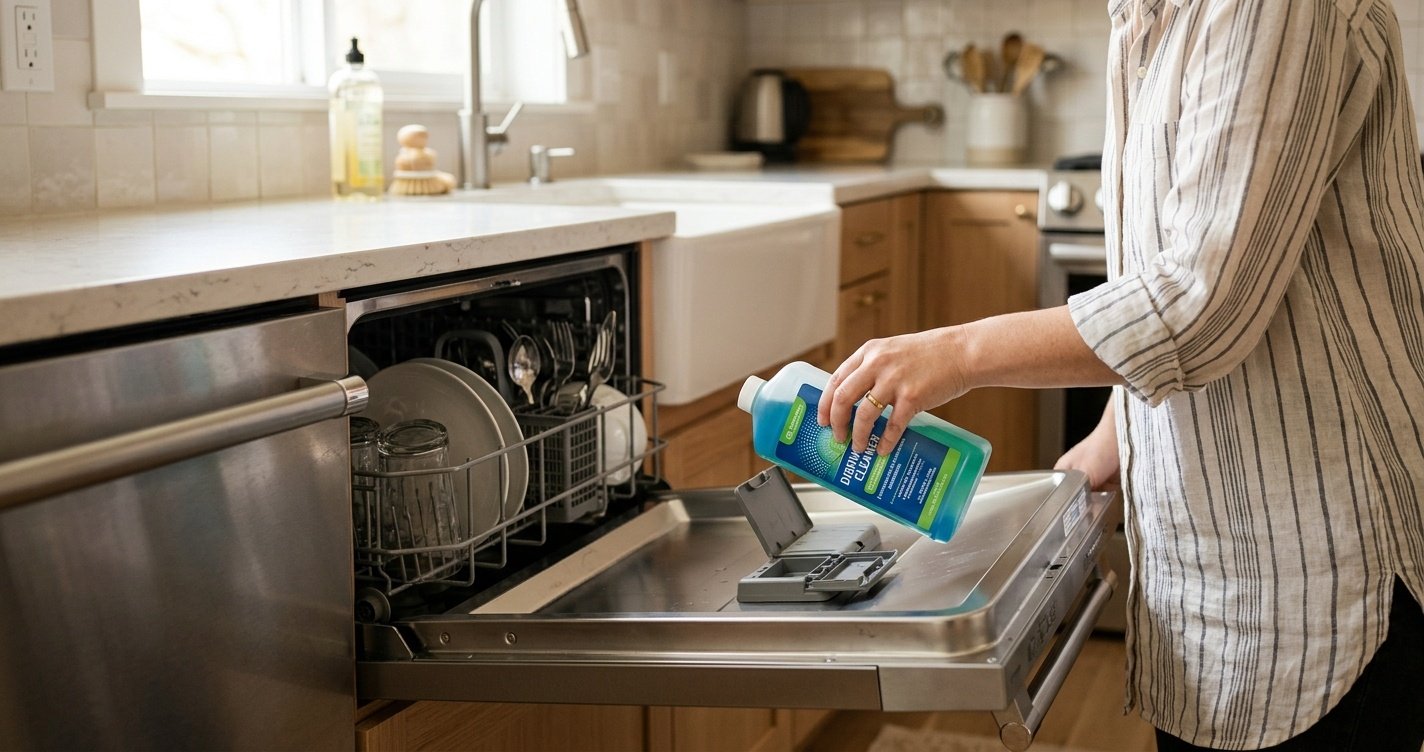
Once a month is the generally recommended frequency for routine maintenance. Setting a recurring reminder makes it easier to keep up with it consistently, rather than only remembering when you notice odors or cloudy glassware. Households with hard water, heavy daily use, or a garbage disposal sharing the same drain line may benefit from a slightly more frequent schedule.
Frequently Asked Questions
Where do you put dishwasher cleaner?
For most tablet cleaners, place it directly in the bottom of the tub rather than the detergent dispenser or utensil basket, unless you’re running the dishwasher empty — check your specific product’s packaging, since placement can vary by brand and formula.
Can I run dishwasher cleaner with dishes inside?
Yes, most dishwasher cleaners are safe to use with a normal load of dishes, and several formulas can even help descale cloudy glassware in the process. Add your regular detergent as usual alongside the cleaner.
How long does a dishwasher cleaning cycle take?
It typically runs the same length as a standard wash cycle — generally one to three hours, depending on your dishwasher model and the specific cycle selected.
Should I run the dishwasher empty or with dishes when using a cleaner?
Both work, but running it empty is generally better for a deep clean, especially the first time you use a cleaner or if buildup is significant. Running it with dishes is fine for routine monthly maintenance.
Can I use vinegar or baking soda along with a dishwasher cleaner?
No, it’s best to avoid combining them in the same cycle. Mixing cleaning agents can interfere with the cleaner’s formula or, in some cases, cause a reaction inside the appliance.
Why does my dishwasher still smell after using a cleaner?
This is often caused by lingering moisture rather than the cleaner not working — leaving the door slightly ajar after each cycle to let the interior fully dry helps prevent odors from returning.
Conclusion
Using a dishwasher cleaner correctly is less about the specific brand you choose and more about following a handful of consistent steps: clear the filter first, place the cleaner where the packaging tells you to, run the hottest normal cycle available, and let it finish uninterrupted. Do this once a month, wipe down the door gasket afterward, and leave the door cracked open to dry. Most odor, cloudiness, and buildup complaints resolve themselves without any extra scrubbing or guesswork. Skip the urge to add vinegar or bleach into the mix — the cleaner is formulated to do the job on its own.