
Bosch Dishwasher Salt Refill
If your Bosch dishwasher has a salt warning light or your dishes are coming out with white marks, it may be time to refill the dishwasher salt. Using dishwasher salt helps the appliance soften hard water, preventing limescale buildup and improving washing performance.
This guide explains exactly how to refill Bosch dishwasher salt, when to do it, and answers the most common questions homeowners ask.
Read More: Bosch Dishwasher Leaking From Bottom: Causes & Fixes
How to Refill Bosch Dishwasher Salt
To refill the Bosch dishwasher salt, open the salt reservoir at the bottom of the dishwasher, unscrew the cap, fill it with dishwasher salt using a funnel, wipe away any spilled salt, securely replace the cap, and run a rinse cycle if needed.
Why Does a Bosch Dishwasher Need Salt?
Dishwasher salt is used by the built-in water softener.
It helps:
- Prevent limescale deposits
- Improve cleaning performance
- Reduce white residue on glasses
- Protect internal dishwasher components
- Help the detergent work more effectively
If you live in a hard water area, using dishwasher salt is essential for the best results.
Where Is the Salt Reservoir?
The salt compartment is located inside the dishwasher at the bottom.
To find it:
- Open the dishwasher door.
- Remove the lower rack.
- Locate the round screw cap on the base.
- Unscrew the cap to access the reservoir.
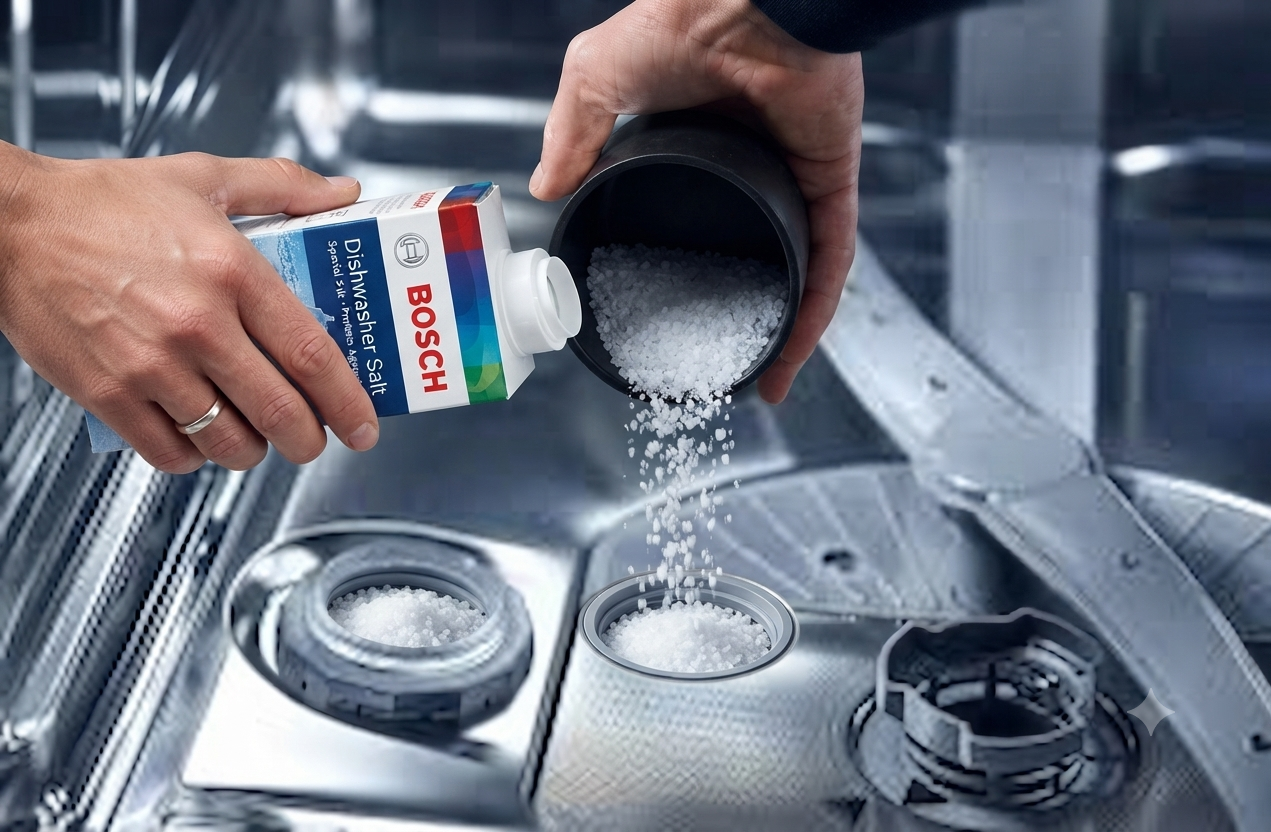
Step-by-Step Bosch Dishwasher Salt Refill Guide
Step 1: Empty the Lower Rack
Slide out the bottom rack for easy access.
Step 2: Open the Salt Reservoir
Unscrew the cap carefully.
If this is the first time filling the dishwasher, add water to the reservoir first according to your Bosch manual.
Step 3: Insert the Funnel
Most Bosch dishwashers include a refill funnel.
This helps prevent spills.
Step 4: Pour in Dishwasher Salt
Slowly pour dishwasher salt until the container is full.
Do not force more salt once it reaches capacity.
Step 5: Clean Any Spills
Remove loose salt from the dishwasher base.
Salt left behind may contribute to corrosion over time.
Step 6: Replace the Cap
Tighten the cap firmly.
Step 7: Run a Quick Rinse
Running a short rinse removes any remaining salt crystals.
How Often Should You Refill Bosch Dishwasher Salt?
The refill frequency depends on:
- Water hardness
- Number of wash cycles
- Dishwasher settings
Typical households refill every:
- Every 4–8 weeks in hard water areas
- Every 2–3 months in softer water regions
If your dishwasher displays a salt indicator light, refill it when the light appears.
What Type of Salt Should You Use?
Always use:
- Dishwasher salt
- Regenerating salt
- Coarse dishwasher salt
Avoid using:
- Table salt
- Sea salt
- Rock salt
- Cooking salt
These products contain additives that can damage the water softener.
Can You Overfill the Salt Reservoir?
No.
Once the reservoir is full, simply stop adding salt.
Some water may overflow during filling, which is normal.
Always wipe away excess salt before closing the compartment.
What Happens If You Don’t Refill Dishwasher Salt?
Without salt:
- Glasses may appear cloudy.
- White residue can form.
- Limescale builds up faster.
- Cleaning performance decreases.
- The dishwasher’s water softener becomes less effective.
Over time, neglecting salt refills can reduce appliance efficiency.
Why Is the Salt Light Still On After Refilling?
The salt indicator may remain illuminated because:
- The sensor has not updated yet.
- The reservoir was not filled.
- The cap is not properly tightened.
- A wash cycle has not been completed.
Usually, the light turns off after one or two wash cycles.
Can You Use the Dishwasher Without Salt?
Yes—but only if:
- Your water is naturally soft, or
- Your model does not use the built-in water softener.
Most Bosch dishwashers are designed to perform best with dishwasher salt when hard water is present.
Common Bosch Dishwasher Salt Refill Mistakes
Avoid these common errors:
- Using table salt
- Leaving spilled salt inside the dishwasher
- Forgetting to tighten the cap
- Ignoring the salt warning light
- Filling the rinse aid compartment instead of the salt reservoir
Bosch Dishwasher Salt Refill Checklist
Before finishing:
- Refill with dishwasher salt only.
- Clean away any spilled salt.
- Tighten the reservoir cap.
- Replace the lower rack.
- Run a rinse or wash cycle.
- Check that the warning light turns off after use.
Frequently Asked Questions
How do I know when my Bosch dishwasher needs salt?
The salt indicator light will illuminate, or you may notice cloudy dishes and reduced cleaning performance.
Refill the salt when the indicator light comes on or if cleaning results begin to decline.
Can I use normal salt in a Bosch dishwasher?
No.
Only dishwasher salt is suitable because it is specially formulated for dishwasher water softening systems.
Never use table salt or cooking salt in a Bosch dishwasher.
Does every Bosch dishwasher need salt?
Not every model does.
Models with an integrated water softener require dishwasher salt.
Check your user manual to confirm whether your Bosch dishwasher uses dishwasher salt.
Why are my dishes still cloudy after adding salt?
Possible causes include:
- Low rinse aid
- Incorrect water hardness setting
- Dirty filters
- Blocked spray arms
- Old detergent
Salt helps soften water, but other maintenance issues can also affect cleaning results.
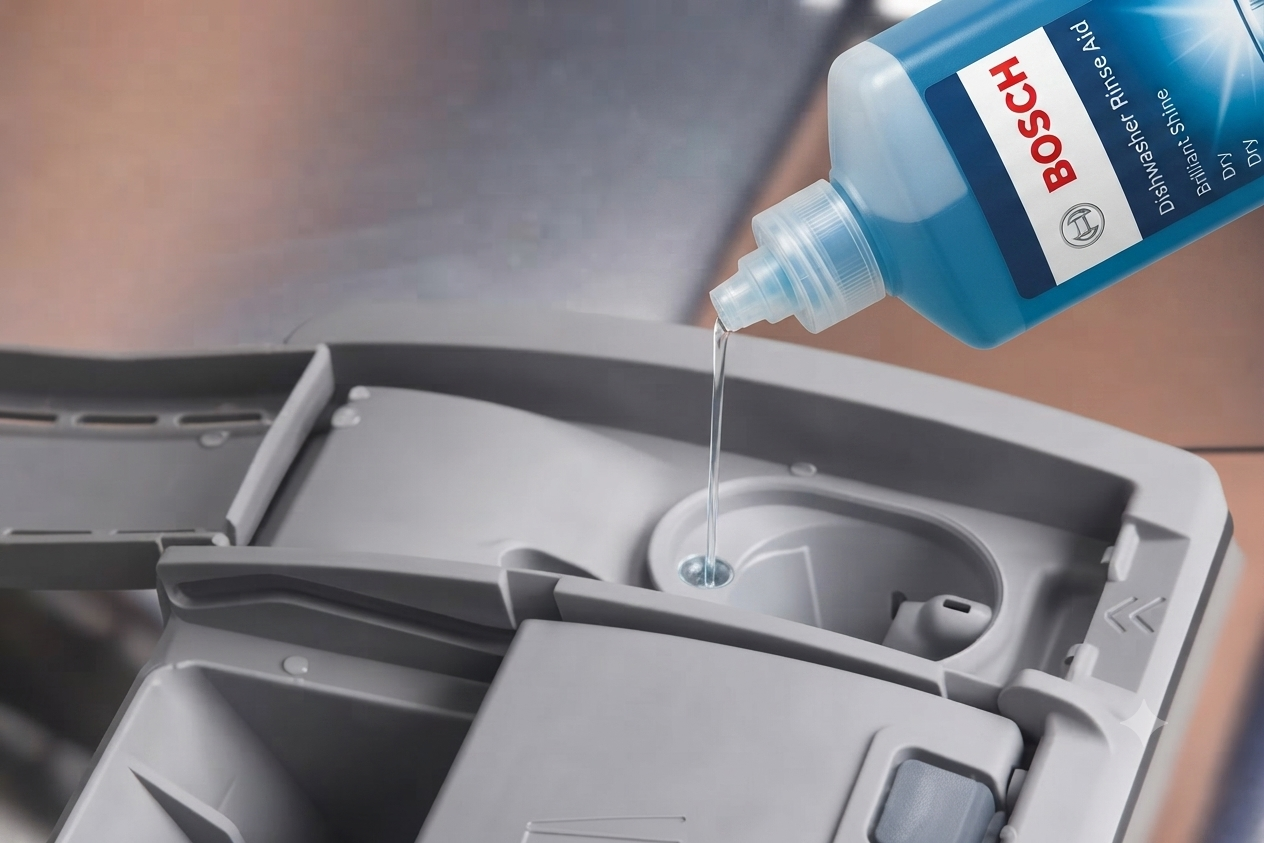
Is dishwasher salt the same as rinse aid?
No.
Dishwasher salt softens water.
Rinse aid improves drying and reduces water spots.
Dishwasher salt and rinse aid serve different purposes and should both be used as recommended.
Final Tip
Refilling the Bosch dishwasher salt is one of the simplest ways to maintain excellent cleaning performance and extend the life of your appliance. Regularly checking the salt level, using the correct type of dishwasher salt, and keeping the water softener working efficiently can help prevent limescale buildup, cloudy glassware, and poor wash results