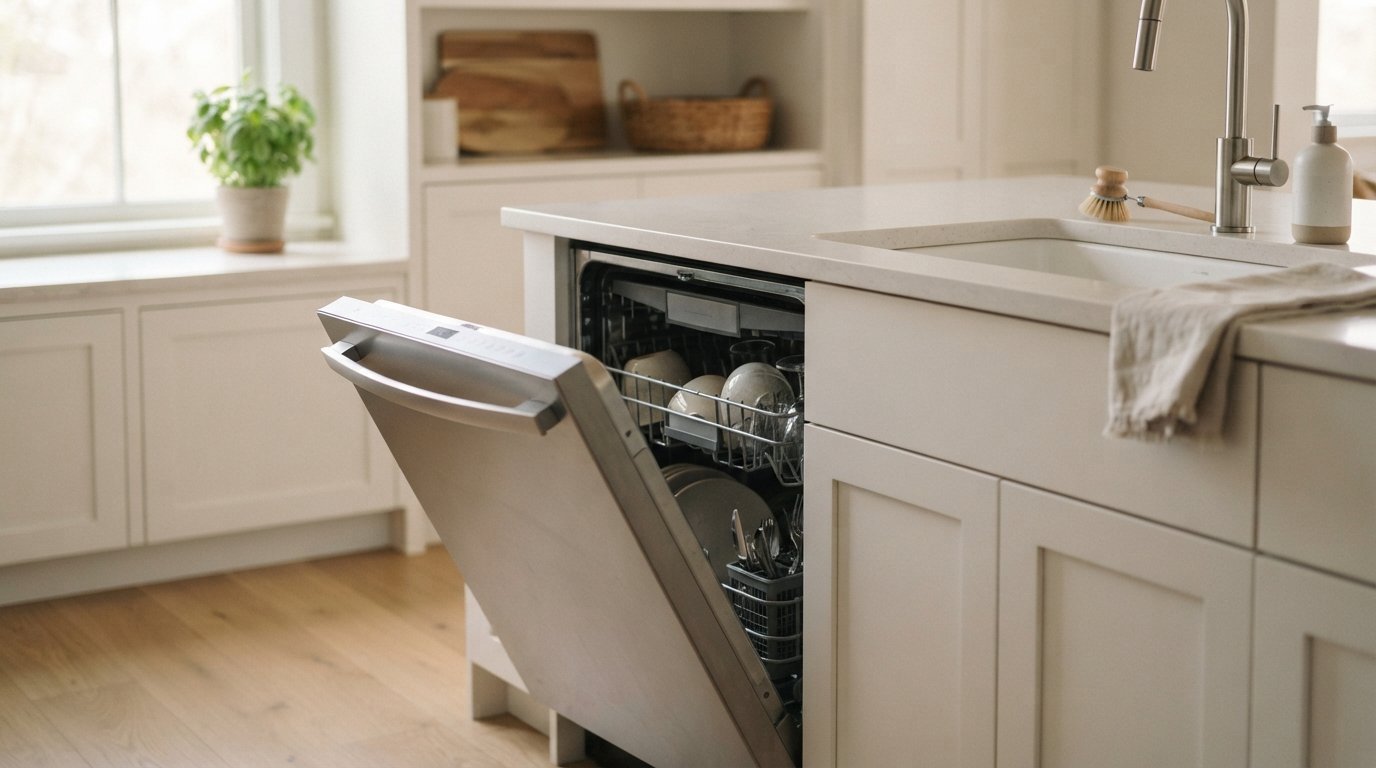
Bosch dishwasher not draining? Don’t rush to call a repair technician. A clogged filter, blocked drain hose, jammed drain pump, or faulty check valve could be preventing your dishwasher from removing water. The good news is that many drainage problems can be fixed at home with a few simple checks. This guide explains why your Bosch dishwasher is not draining, how to troubleshoot the problem step by step, and when professional repair is necessary.
Read More: How to Use Finish Dishwasher Cleaner
Why Is My Bosch Dishwasher Not Draining?
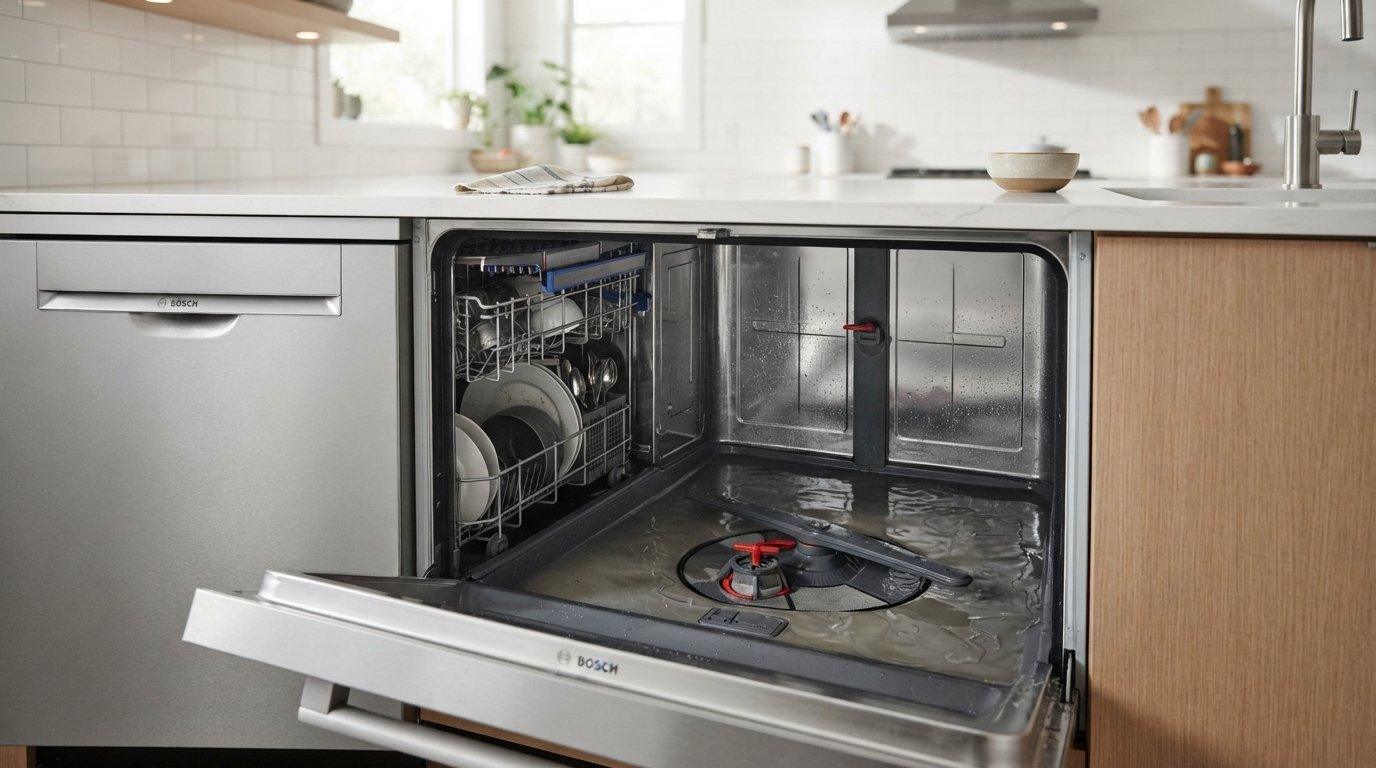
If your Bosch dishwasher has standing water at the bottom after a wash cycle, something may be stopping wastewater from leaving the appliance.
The most common causes include:
- Clogged dishwasher filter: Food particles, grease, and debris can block the filter and restrict water drainage.
- Blocked drain hose: A bent, twisted, or clogged hose can prevent wastewater from flowing into the sink drain.
- Blocked drain pump: Broken glass, food scraps, or other small objects can prevent the pump impeller from rotating.
- Faulty drain pump: A damaged pump may fail to remove water even when the filter and hose are clear.
- Clogged garbage disposal: If your dishwasher drains through a garbage disposal, a blockage can cause water to remain inside the appliance.
- Blocked sink drain: A clogged kitchen sink drain can interfere with dishwasher drainage.
- Stuck check valve: The check valve prevents wastewater from flowing backward into the dishwasher. If it gets stuck, drainage problems can occur.
Identifying the cause first can save you time, money, and unnecessary replacement parts.
7 Ways to Fix a Bosch Dishwasher Not Draining
Before troubleshooting, switch off the dishwasher and disconnect its power. If it is hardwired, turn off the appropriate circuit breaker. Wear protective gloves when checking for broken glass or debris.
1. Clean the Dishwasher Filter
A dirty filter is one of the most common reasons a Bosch dishwasher stops draining properly.
The filter catches food particles and prevents debris from entering the drain pump. Over time, grease, food scraps, and other residue can build up and restrict water flow.
How to clean the filter:
- Open the dishwasher door and pull out the bottom rack.
- Locate the filter assembly at the bottom of the dishwasher.
- Turn the filter counterclockwise to unlock it.
- Carefully lift the filter out.
- Rinse it under warm running water.
- Use a soft brush to remove stubborn food particles and grease.
- Reinstall the filter and lock it securely into position.
Avoid using abrasive brushes or harsh cleaning chemicals that could damage the filter.
Pro tip: Clean your Bosch dishwasher filter regularly, especially if you frequently wash dishes with food residue.
2. Check the Drain Hose for Blockages
If the filter is clean but your dishwasher still has standing water, inspect the drain hose.
The drain hose carries wastewater from the dishwasher to the kitchen sink drain or garbage disposal. A kink, blockage, or improper installation can prevent water from draining.
How to inspect the drain hose:
- Switch off the dishwasher’s power and water supply.
- Locate the drain hose behind or underneath the dishwasher.
- Check for bends, twists, or crushed sections.
- Inspect the hose connection under the kitchen sink.
- Look for visible debris or signs of blockage.
- Straighten any kinks and correct the hose positioning.
If the hose needs to be disconnected, prepare a container and towels to catch residual water. Avoid forcing water through a connected hose or using excessive pressure.
Important: Bosch dishwashers generally require an appropriately installed drain hose with a high loop or an approved air-gap arrangement, depending on local plumbing requirements and the installation instructions.
3. Inspect the Drain Pump for Debris
A blocked drain pump is another possible reason your Bosch dishwasher is not draining.
Small objects such as broken glass, food particles, labels, and bones can become lodged around the pump impeller.
How to check the drain pump:
- Turn off the dishwasher and disconnect its power.
- Remove the bottom rack.
- Take out the filter assembly.
- Remove any standing water using a cup or sponge.
- Locate the drain pump cover according to your Bosch model’s instructions.
- Carefully inspect the accessible pump area for debris.
- Remove visible obstructions using protective gloves or suitable tools.
Never reach blindly into the pump opening. Broken glass can cause serious cuts. If the impeller is damaged, stuck, or inaccessible, contact a qualified appliance technician.
4. Check the Garbage Disposal Connection
Does your Bosch dishwasher drain into a garbage disposal? If so, a clogged disposal connection could be responsible for the drainage issue.
A common installation mistake is forgetting to remove the knockout plug inside a newly installed garbage disposal. This plug blocks wastewater from entering the disposal connection.
What to do:
- Turn off the dishwasher and garbage disposal.
- Check whether the sink drains normally.
- Inspect the dishwasher drain hose connection to the disposal.
- Look for visible blockages around the connection.
- If the disposal is newly installed, have the installer verify that the dishwasher inlet knockout plug was removed.
If your kitchen sink is also draining slowly, clear the sink or disposal blockage before testing the dishwasher again.
5. Inspect the Drain Pump and Check Valve
If the filter, hose, and disposal are clear, the problem may involve the drain pump or check valve. The drain pump pushes wastewater out of the dishwasher, while the check valve helps prevent drained water from returning.
Possible warning signs include:
- The dishwasher makes a humming sound but does not drain.
- Water remains at the bottom after the cycle.
- The dishwasher repeatedly attempts to drain.
- Dirty water flows back into the dishwasher.
A damaged drain pump may need replacement. A stuck or defective check valve may also require cleaning or replacement, depending on the model.
Because pump and valve designs differ across Bosch dishwasher models, consult the model-specific service instructions before removing components.
6. Reset Your Bosch Dishwasher
Sometimes, a temporary electronic control issue can interrupt a wash or drain cycle. Resetting your Bosch dishwasher may help if the appliance has stopped responding or the cycle was interrupted.
How to reset a Bosch dishwasher:
- Check that the dishwasher door is fully closed.
- Locate the Start or Reset control.
- Follow the reset instructions in your model’s user manual.
- On many Bosch models, holding the Start button for approximately 3 seconds initiates cancellation and drainage.
- Allow the dishwasher to complete its drain operation.
The exact reset procedure varies by model, so do not assume every Bosch dishwasher uses the same button combination.
Remember: A reset cannot repair a physically blocked hose, damaged pump, or faulty valve.
7. Check for a Clogged Sink Drain
Your dishwasher may be working correctly, but a blocked kitchen drain can prevent wastewater from flowing away. Try running water through your kitchen sink. If it drains slowly or backs up, the plumbing system may need attention.
How to troubleshoot:
- Check whether the sink drain is clogged.
- Inspect the garbage disposal for obstructions.
- Look for a blocked dishwasher drain connection.
- Have the kitchen drain professionally cleared if necessary.
Once the plumbing blockage is resolved, run a short dishwasher cycle to check whether the water drains properly.
Bosch Dishwasher Not Draining but No Error Code
Sometimes, a Bosch dishwasher retains water without displaying an error code.
This does not necessarily mean the dishwasher is working properly.
Possible reasons include:
- A partially blocked filter.
- A restricted drain hose.
- A weak or failing drain pump.
- A clogged sink or garbage disposal connection.
- A drainage problem that has not triggered an electronic fault.
Start by cleaning the filter and checking the drain hose. If these components are clear and water remains inside, the pump and check valve may need professional inspection.
Bosch Dishwasher Not Draining and Making Noise
Unusual noises during the drain cycle can help identify the problem.
Here are some common possibilities:
| Noise | Possible cause |
|---|---|
| Humming sound | Jammed or struggling drain pump |
| Grinding noise | Debris or broken glass near the pump |
| Gurgling sound | Restricted drain hose or plumbing blockage |
| Repeated clicking | Possible pump, control, or electrical issue |
| No sound during draining | Pump, wiring, or control problem |
These sounds are clues rather than definitive diagnoses. If you hear grinding or persistent humming, stop the dishwasher and investigate before running another cycle.
Bosch Dishwasher Error Codes Related to Drainage
Some Bosch dishwashers display error codes when a drainage problem occurs.
| Error code | What it generally indicates |
|---|---|
| E24 | Drainage problem, often associated with a blocked drain path |
| E25 | Drain pump or pump-cover blockage or related drainage issue |
The exact meaning and troubleshooting procedure can vary by model.
If your dishwasher displays E24 or E25, inspect the filter, pump area, and drain hose before considering component replacement. Do not repeatedly reset the dishwasher without addressing the underlying drainage problem.
How Much Does It Cost to Fix a Bosch Dishwasher That Won’t Drain?
Repair costs depend on the cause, dishwasher model, replacement parts, and local labor rates.
Here is a general breakdown of possible repair expenses:
| Repair | Typical cost category |
|---|---|
| Cleaning the dishwasher filter | Free to low cost |
| Removing a drain hose blockage | Low cost |
| Clearing a garbage disposal connection | Free to low cost |
| Replacing the drain hose | Moderate |
| Replacing the check valve | Moderate |
| Replacing the drain pump | Moderate to high |
| Professional diagnostic and labor | Varies by location |
These are relative cost categories, not fixed prices. Ask for a diagnosis and written estimate before approving a repair.
How to Prevent Your Bosch Dishwasher From Not Draining Again
Regular maintenance can help prevent drainage problems and extend the life of your dishwasher.
Follow these simple maintenance tips:
- Clean the filter regularly: Remove trapped food particles before they build up.
- Scrape excess food from dishes: Large food scraps can contribute to blockages.
- Inspect the drain hose: Check for kinks, crushing, or leaks.
- Keep the sink drain clear: Make sure wastewater can flow freely through the plumbing.
- Avoid overloading the dishwasher: Arrange dishes properly so they do not interfere with the filter or spray arms.
- Use dishwasher-approved detergent: Avoid regular dishwashing liquid, which can create excessive suds.
- Check for unusual noises: Address grinding, humming, or repeated drainage problems early.
A few minutes of routine maintenance can help prevent expensive repairs.
When Should You Call a Professional?
DIY troubleshooting is useful for simple problems, but some drainage issues require professional repair.
Contact a qualified Bosch appliance technician if:
- The dishwasher still will not drain after cleaning the filter and checking the hose.
- The drain pump makes a loud grinding or humming noise.
- The pump appears damaged.
- Water leaks from underneath the dishwasher.
- The appliance repeatedly displays E24 or E25.
- The dishwasher trips the circuit breaker.
- You suspect damaged wiring or an electronic control fault.
Never attempt electrical repairs while the dishwasher is connected to power.
If your appliance is still under warranty, check Bosch’s warranty terms before attempting repairs that could affect coverage.
Frequently Asked Questions
Why is there standing water in the bottom of my Bosch dishwasher?
Standing water is commonly caused by a clogged filter, blocked drain hose, jammed drain pump, or restricted kitchen drain connection. Clean the filter first and inspect the accessible drainage components.
A small amount of water in the sump area beneath the filter can be normal. However, water covering the dishwasher floor after a completed cycle may indicate a drainage problem.
How do I force my Bosch dishwasher to drain?
Many Bosch dishwasher models allow you to cancel the current cycle by holding the Start button for approximately 3 seconds. The dishwasher may then begin a drain operation.
Check your model’s user manual for the exact procedure.
Why does my Bosch dishwasher fill with water but not drain?
If the dishwasher fills normally but cannot drain, the problem may be a blocked filter, restricted drain hose, jammed pump, or faulty drain pump.
Check the drainage system before replacing any parts.
Can I run my Bosch dishwasher with standing water?
It is better not to run repeated wash cycles when significant standing water remains. First identify and resolve the drainage problem to avoid potential leaks, poor cleaning, or further damage.
Is E24 always a faulty drain pump?
No. E24 does not automatically mean the drain pump has failed. A blocked filter, kinked hose, restricted plumbing connection, or other drainage issue may trigger the error.
Check the complete drainage path before replacing the pump.
Why does my Bosch dishwasher drain sometimes but not always?
Intermittent drainage problems can result from a partial blockage, debris moving around the pump, a restricted hose, or an electrical or mechanical fault.
If the issue keeps returning, have the drain pump and plumbing connections inspected.
How often should I clean my Bosch dishwasher filter?
Check the filter regularly and clean it whenever you notice food buildup. Cleaning it weekly is a practical maintenance routine for households that use their dishwasher frequently.
Final Thoughts: Get Your Bosch Dishwasher Draining Again
A Bosch dishwasher not draining does not always mean you need an expensive repair. In many cases, a clogged filter, blocked drain hose, jammed pump, or obstructed sink connection is responsible.
Start with the easiest checks: clean the filter, inspect the drain hose, and check the garbage disposal connection. If water still remains inside, the drain pump, check valve, or electrical system may need professional attention.
The key is to identify the cause before replacing parts. With the right troubleshooting steps, you can often restore proper drainage, avoid unnecessary repair expenses, and keep your Bosch dishwasher running efficiently.