
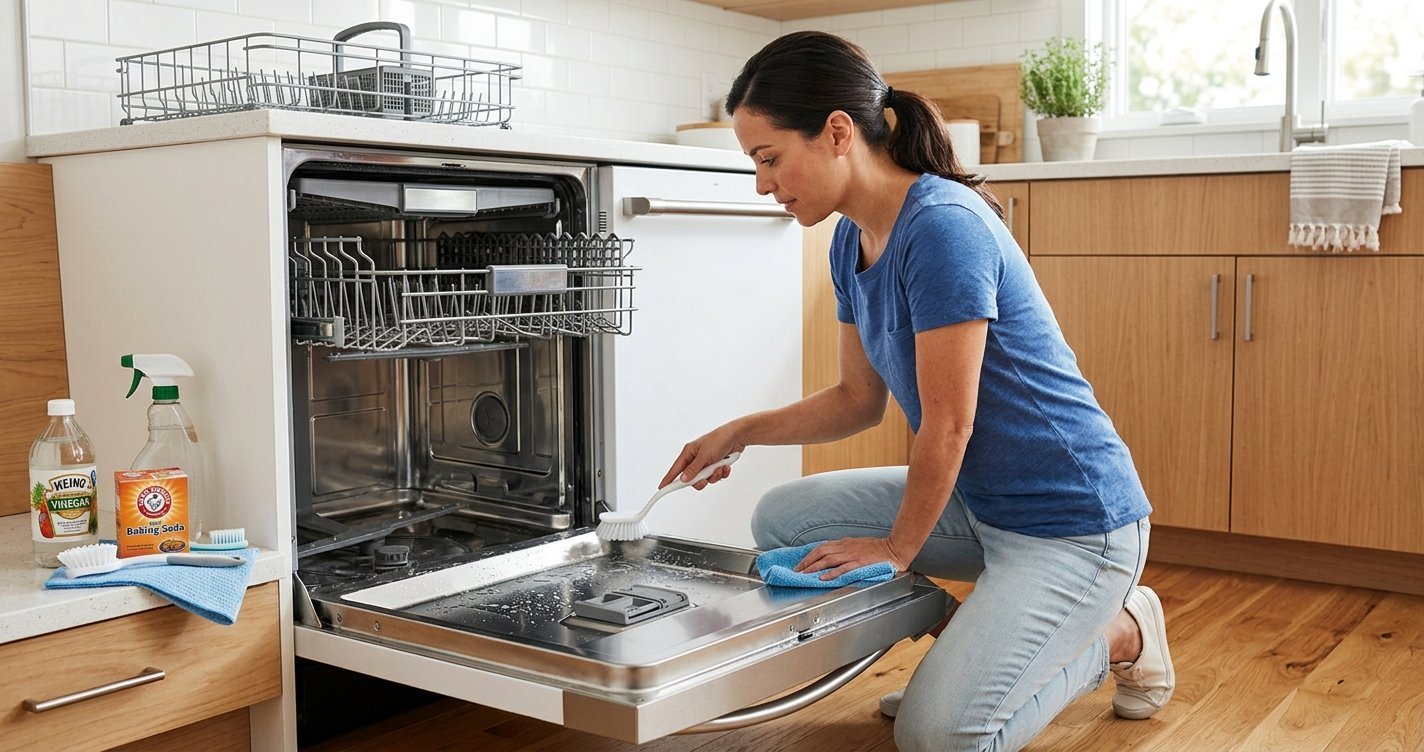
A dishwasher cleans your dishes, but it also needs regular cleaning. Food particles, grease, mineral deposits, and soap residue can build up inside the machine, causing odors, cloudy glassware, or poor cleaning performance.
The good news: you can clean most dishwashers in about 30–45 minutes using basic household supplies.
Dishwasher Cleaning at a Glance
| Cleaning task | How often | What you need | Approx. time |
| Wipe door and seals | Weekly | Damp cloth, mild dish soap | 5 minutes |
| Clean filter | Weekly–monthly | Soft brush, warm water | 10 minutes |
| Clean spray arms | Monthly | Toothpick, warm water | 10 minutes |
| Deep-clean interior | Monthly | Dishwasher cleaner or suitable descaling solution | 30–60 minutes |
| Check drain area | Monthly | Cloth, soft brush | 5 minutes |
1. Empty the Dishwasher
Remove all dishes, racks, and removable utensil holders.
Check the bottom of the dishwasher for visible food scraps, glass fragments, labels, or other debris. Remove anything you can safely reach.
Tip: Turn off the dishwasher before removing parts or reaching into areas around the pump or drain.
2. Clean the Dishwasher Filter
The filter catches food particles and is one of the most important parts to clean.
- Locate the filter at the bottom of the dishwasher.
- Twist or lift it out according to your dishwasher’s instructions.
- Rinse it under warm running water.
- Use a soft brush to remove stuck-on debris.
- Rinse thoroughly and reinstall it securely.
Avoid using an abrasive brush that could damage the filter.
3. Clean the Spray Arms
Spray arms can become blocked by food particles or mineral deposits.
- Remove the spray arms if your model allows it.
- Rinse them under warm water.
- Check the small spray holes for blockages.
- Carefully remove debris with a toothpick or soft brush.
- Reinstall the arms and make sure they rotate freely.
Blocked spray holes can prevent water from reaching your dishes properly.
4. Wipe the Door and Door Seal
Food residue and grime often accumulate around the dishwasher door.
Use a soft cloth dampened with warm water and a small amount of mild dish soap. Wipe:
- The rubber door gasket
- The inside edge of the door
- The corners
- Around the detergent dispenser
- The bottom edge of the door
Avoid soaking electrical controls or spraying cleaner directly onto them.
5. Clean the Drain Area
Look at the bottom of the dishwasher around the filter and drain opening.
Remove loose debris with a cloth or paper towel. If buildup is present, gently clean the area with a soft brush.
Do not disassemble the drain pump unless your manufacturer’s instructions specifically tell you to do so.
6. Run a Dishwasher Cleaning Cycle
Once the removable parts are clean, run an empty hot cycle using a commercial dishwasher cleaner or descaler that is compatible with your machine.
Follow the product instructions for the correct amount and cycle.
If your dishwasher manufacturer recommends a particular cleaning method, follow that guidance instead of using a homemade solution.
What about vinegar and baking soda?
You’ll often see vinegar or baking soda recommended as DIY dishwasher cleaners. However, repeated use of acidic or abrasive substances isn’t appropriate for every dishwasher, seal, finish, or manufacturer. Check your owner’s manual before using them.
Never mix cleaning products, particularly products containing bleach with acidic cleaners.
7. Clean the Exterior
Finish by wiping the outside of the dishwasher with a soft, damp cloth.
For stainless-steel models, follow the manufacturer’s recommended cleaner and wipe in the direction of the grain.
Don’t use abrasive scouring pads that can scratch the surface.
How Often Should You Clean a Dishwasher?
For most households, a practical routine is:
- Weekly: Remove obvious debris and wipe the door seal.
- Monthly: Clean the filter and inspect the spray arms and drain area.
- Every 1–3 months: Run a deep-cleaning or descaling cycle, depending on usage and water hardness.
- As needed: Clean sooner if you notice odors, residue, cloudy dishes, or reduced cleaning performance.
Signs Your Dishwasher Needs Cleaning
Your dishwasher may need attention if you notice:
- A persistent unpleasant smell
- Food particles left on dishes
- Cloudy or streaky glassware
- Water draining slowly
- Dirty buildup around the door seal
- Spray arms that don’t rotate freely
- Visible mineral or grease deposits
Quick Dishwasher-Cleaning Checklist
- Empty the dishwasher.
- Remove and clean the filter.
- Check and clean the spray arms.
- Wipe the door and rubber seal.
- Clear accessible debris around the drain.
- Run an appropriate dishwasher-cleaning or descaling cycle.
- Wipe the exterior.
- Return the racks and other parts to their proper positions.
Bottom line: The filter, spray arms, door seal, and drain area deserve the most attention. Regular cleaning helps your dishwasher remove food and grease more effectively and can prevent unpleasant odors and buildup. Always check your dishwasher’s manual before using a particular cleaner or removing components.